
How can spending time in nature help us cope with everyday stress?
New research from RESONATE’s Case Study 3 in Plovdiv, Bulgaria, explores how contact with nature is associated with psychological resilience and mental health.
Nature is often associated with relaxation and well-being. But is spending time in green spaces also linked to how we cope with the stresses of everyday life? New research from RESONATE’s Case Study 3 in Plovdiv, Bulgaria, investigates how contact with nature relates to psychological resilience and mental health.
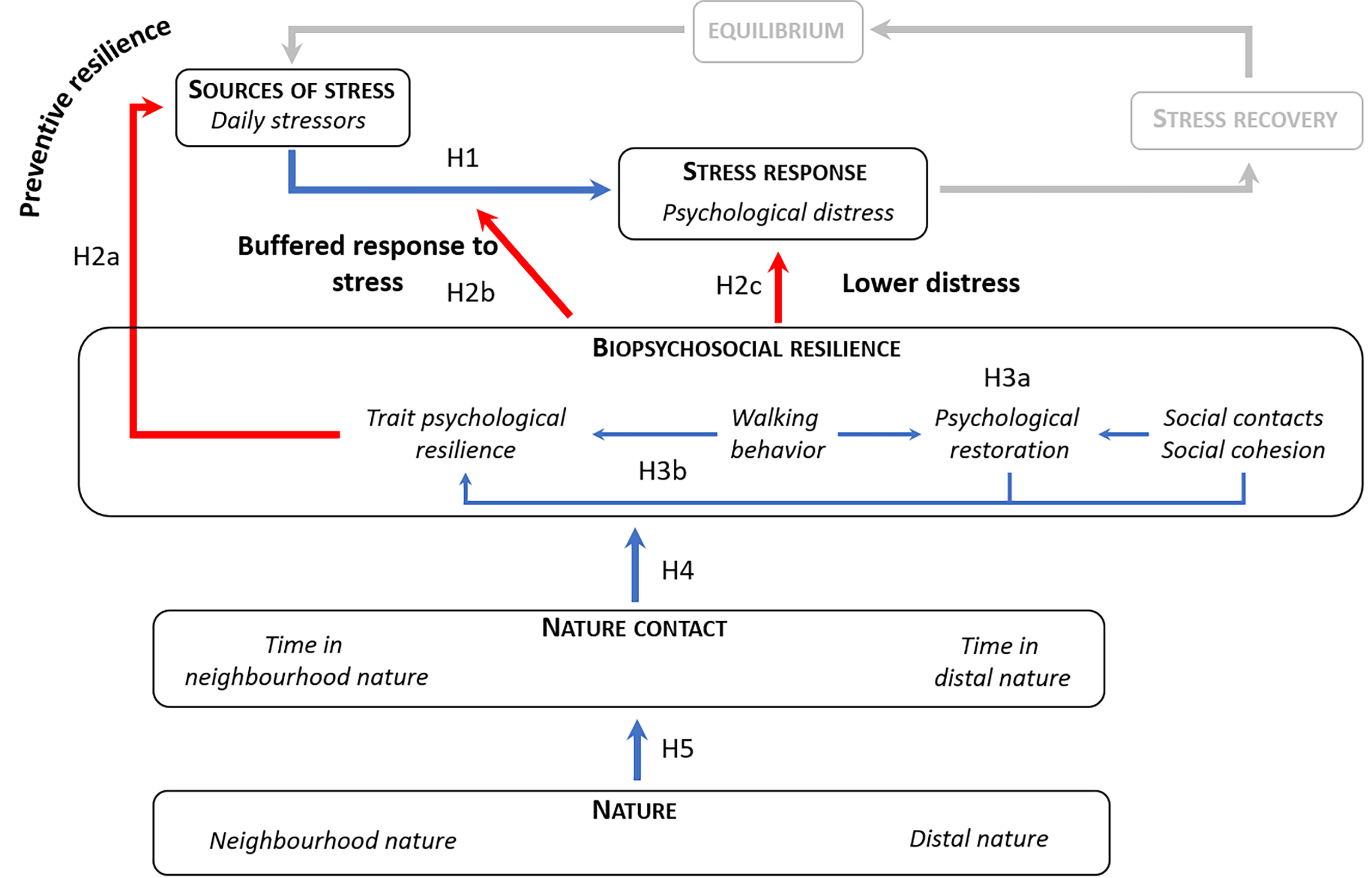
The study builds on the Nature-Based Biopsychosocial Resilience Theory (NBRT), which explores how biological, psychological and social resources interact in relation to stress. Rather than looking at nature exposure in isolation, the researchers examined several factors that may connect everyday contact with nature to psychological well-being.
Exploring the relationship between nature and resilience
In 2024, researchers collected data from a representative sample of 1,506 adults aged 18–94 in Plovdiv. Through interviews, participants provided information about their access to green and blue spaces, how much time they spent in natural environments, their physical activity and social connections, as well as their experiences of psychological restoration, resilience and distress.
The researchers used statistical pathway models to explore how these different factors relate to one another and whether nature contact is associated with a reduced link between everyday stress and psychological distress.
What did the study find?
The results suggest that spending more time in nature is associated with lower levels of psychological distress. Two potential pathways were particularly relevant: restorative experiences in natural environments and physical activity, especially walking.
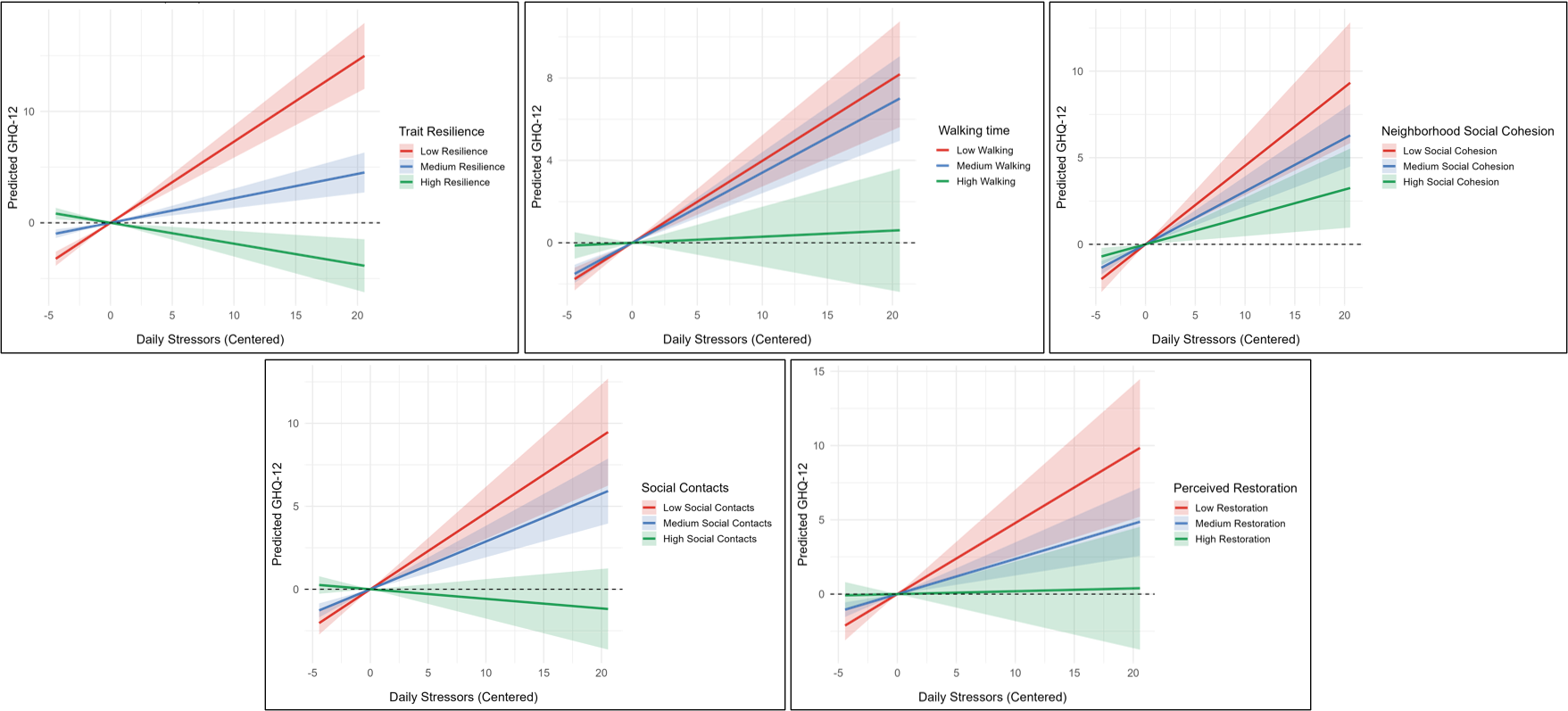
The findings also point to the importance of psychological resilience. Resilience resources were associated with a weaker relationship between everyday stressors and psychological distress. Time spent in nature, however, explained only a very small part of this buffering association.
Together, the results offer insights into the different ways everyday contact with nature may be connected to mental health. The pathways also appeared to differ depending on where time in nature was spent. Time in neighbourhood nature was linked mainly to walking-related physical activity, while time in more distant natural environments was linked more strongly to psychological restoration. This suggests that it is not only the availability of green spaces that matters, but also where and how people interact with and experience nature.
Why does this matter for urban environments?
Understanding these connections can help inform how we plan and manage urban green spaces. Environments that offer opportunities to walk, spend time outdoors, recover from everyday demands and connect with others may be associated with better well-being.
However, the study is based on cross-sectional data, meaning that it cannot establish cause and effect. Further waves of the longitudinal research will help researchers better understand how these relationships develop over time.
Through its research across different contexts, RESONATE aims to deepen understanding of how nature-based interventions and everyday contact with nature are related to individual and community resilience, health and well-being.
Read the scientific paper
Dzhambov, A. M. et al. (2026). Testing the stress-buffering claims of nature-based biopsychosocial resilience theory: A cross-sectional pathway analysis. Wellbeing, Space and Society, 11, 100492.
Explore more from RESONATE
Read our other articles and discover more insights from the project.